Search
Thursday
May262022

I Want to Believe

By Kim Bellard, May 26, 2022

I know, I should be writing about hot topics like monkeypox or the baby formula shortage, but, c’mon, Congress held hearings last week about UFOs — the first in 50 years! I mean, I followed Project Blue Book in the 1970’s, watched “The X-Files” in the 1990’s, and have seen UFO videos on YouTube. If Congress is starting to take UFO’s seriously, how could I not?

And for those of you who don’t see any possible connection to healthcare (except for those unpleasant alien probes…), let me put it to you this way: by 2050, is it more likely that:

· We’ll know what UFOs actually are;

· We’ll have fundamentally reformed the U.S. healthcare system.

I thought so.

So, maybe UAPs are, indeed, aliens. Maybe some John Galt-type character has formed his/her/their own “men of the mind” collective to create new technologies for their own use. Maybe they’re all really only swamp gas. What we know is that we don’t (yet) know.

The intriguing thing to me is that they just seem way beyond our capabilities, beyond our understanding. They mystify us. They make our technology seem outdated. They sometimes seem to defy the laws of physics. Astrobiologist Hagg Misra told Science News, “Maybe they’re a sign of something like new physics.”

That, my friends, is exciting.

I like to think that UAPs were built in some teenager’s garage, using off-the-shelf materials in some novel way, piloted out by that teenager and his/her/their buddies out on a joy ride. Whether that garage is in Des Moines or Alpha Centauri, I don’t much care.

I love things that put us in our place, that remind us we don’t have all the answers, that open our minds to the realization that there’s a lot left to learn. 

Moral of the story: if you think you know how our healthcare system works and the constraints it must have, maybe you need to be open to healthcare’s UAPs — unidentified alterative possibilities.

In “The X-Files,” Fox Mulder’s unspoken (but not unwritten) mantra was “I Want to Believe.” As it turned out, there were UFOs, the aliens were among us, and there was an alien/government conspiracy. Sometimes being the lone believer isn’t crazy.

I want to believe in a healthcare system that is radically less expensive, much more effective, and delivers on health equity. I’m all for any new physics — or, I suspect, new biology — that helps us accomplish that healthcare system.

I’m waiting for the pill that fixes genetic defects, the harmless beam that destroys incipient cancers, the relentless nanobots that prevent strokes and heart attacks. I want the kind of healthcare I see in science fiction.

In today’s healthcare system, such miracles would find the pill hugely expensive, the beam’s side effects so bad that they might outweigh the benefits, and the nanobots prone to being hacked. Instead of technology being so advanced that it is indistinguishable from magic, as Arthur Clark put it, in healthcare we get magic that overpromises, underdelivers, and costs too much.

Our healthcare system is a lot like those military aircraft — slow to change, incomparably costly, highly technical, reliant on skilled operators, disturbingly fragile, and deeply indebted to the healthcare/industrial complex. I hope for a healthcare UAP to outmaneuver them like a kid on a joyride.

I don’t want everyone to suddenly believe in UFOs, nor do I want anyone to assume that their technologies are beyond our capabilities. I do want us to let them open our minds to the possibilities they suggest.

Similarly, there are plenty of sightings to suggest that our healthcare system could be much better, but we’re going to need some true believers to make it so. Are you one of them?

This post is an abridged version of the original posting in Medium. Please follow Kim on Medium and on Twitter (@kimbbellard)  

Friday
May202022

Examining Unnecessary Medicare Patient Surgeries During First Year of Pandemic

by MCOL Staff, May 20, 2022

The nation’s hospitals performed more than 100,000 unnecessary and potentially harmful procedures on older patients between March and December 2020, according to a new analysis by the Lown Institute, a healthcare think tank. Coronary stents and back surgeries were among the most-performed unnecessary procedures over this period.

The analysis of Medicare claims data shows that thousands of vulnerable patients were admitted to U.S. hospitals during the height of the pandemic, before COVID-19 vaccines were approved, for procedures that offer little to no clinical benefit or were more likely to harm patients than help them. The analysis of eight unnecessary and potentially harmful procedures is the first to measure rates of overuse at U.S. hospitals during the COVID-19 pandemic.

“You couldn’t go into your local coffee shop, but hospitals brought people in for all kinds of unnecessary procedures,” said Vikas Saini, MD, president of the Lown Institute. “The fact that a pandemic barely slowed things down shows just how deeply entrenched overuse is in American healthcare.”

Volume of eight low-value procedures in U.S. hospitals per Medicare claims

  • Stents for stable coronary disease: 45,176 (42%)
  • Vertebroplasty for osteoporosis: 16,553 (16%)
  • Hysterectomy for benign disease: 14,455 (14%)
  • Spinal fusion for back pain: 13,541 (13%)
  • Inferior vena cava filter: 9,595 (9%)
  • Carotid endarterectomy: 3,667 (3%)
  • Renal stent: 1,891 (2%)
  • Knee arthroscopy: 1,596 (1%)
  • Total unnecessary procedures identified: 106,474

Coronary stents were the most overused by volume of all the procedures. Across the country, approximately one in five met criteria for overuse, including at some of the nation’s most well-regarded hospitals. For example, among the U.S. News top 20 hospitals, all had rates of coronary stent overuse above the national average, and four had rates at least double that: Cleveland Clinic (44%), Houston Methodist Hospital (44%), Mt. Sinai (42%), and Barnes Jewish Hospital (42%).

For this analysis, the Lown Institute used data from the 100% Medicare claims database from January – December 2020 to evaluate volume of overuse for eight common low-value procedures. Procedures and overuse criteria were based on Lown’s previously published research into measurement of low-value care at hospitals

Thursday
May122022

What do Copernicus and Today’s Healthcare Leaders Have in Common?

By Maria D. Moen, May 13, 2022

Both Use Data to Change the World as We Know It 
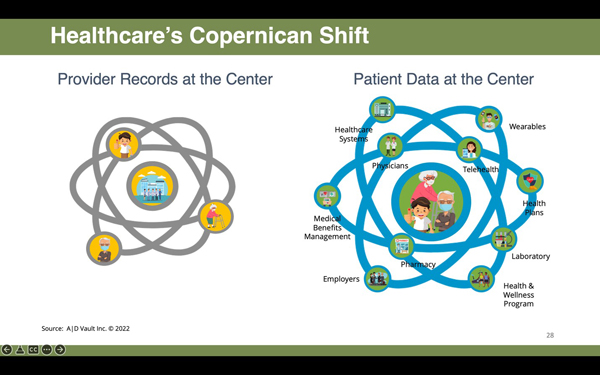
In 1543, Copernicus was the first astronomer to propose the theory that the earth and other planets rotated around the sun, which contradicted popular thought at the time that the earth was the center of the universe. Through mathematical and astrological analysis over the course of many years, Copernicus effectively moved the sun to the center of the universe with his simple and elegant explanation of the retrograde motions of the planets.

Today, a similar “Copernican Shift” is taking place in healthcare as innovative leaders tackle the hard problems of staffing shortages, reduced patient loyalties due to trust and health equity concerns related to the healthcare system as a whole, and the need to bring forward strategies for growth to rebuild their own particular business models post-COVID.  Turning to new ways of looking at how to regain diminished revenue and increase market share by leveraging the data that has been collected about their patients, combined with the insights that data is revealing, has led to a shift in the balance of power from the patient revolving around various healthcare providers to the patient being the center of the healthcare universe, around which their healthcare providers revolve to deliver coordinated, complementary care.  This foundational change in how providers perceive and treat their patients as a key recovery strategy post-COVID is gaining traction as they derive strategies to make the transition from traditional fee-for-service to value-based care models.

For decades, healthcare decision-making was based principally on a provider’s own records which were often in paper files and siloed across the various organizations that treated the same patients. But a paradigm shift is taking place, thanks to the power of technology, to better connect providers and patients in ways that produce more data-driven decision-making, better clinical outcomes, and greater patient satisfaction. Today we find ourselves in a watershed moment that could rightfully be called a digital health revolution as new technology platforms and smart devices continue to disrupt, in a positive sense, the way information is collected, the way healthcare is delivered, and the way consumers are able to personally interact with the healthcare system. As a result, emerging technologies have evolved from a “nice to have” to a “need to have.” Now that this fuse has been lit, all indications point to an ever-increasing acceleration of this movement in 2022 and beyond.

It is encouraging to see the healthcare ecosystem populated with an increasing array of marvelous innovations capable of efficiently performing many useful, previously resource-intensive functions. These solutions put our industry on a journey to even greater achievement while also providing visibility into how we can expect the digital healthcare engine to evolve in the near term. In this atmosphere of looking at old problems in new ways with more powerful tools, three truths have been revealed:

1. The best reporting tools look forward, not backward. Business leaders don’t adopt technology based on capabilities alone. They often select solutions based on the reporting and analytical insights they can gain and whether those insights translate to meaningful business intelligence. Reporting that looks forward and projects what “could” happen as delivery systems are incrementally adjusted based on what “did” happen, gives clarity to  a wide array of sectors within healthcare. In doing so, the shift to put the patient and what they want at the center of treatment decisions has become more mainstream and less innovation.

When the power of historical and current data is harnessed to reveal issues or barriers to increased productivity and higher patient satisfaction, those matters can be confronted in a timely manner by the organization before they snowball into large-scale problems. Monitoring patient trends using data available (but previously not actively used) to create insights across populations also allows healthcare organizations to track patient behaviors as part of anticipating how to increase utilization and satisfaction. This information helps tailor care to the individual which improves outcomes and reduces unwanted events. In short, effective reporting isn’t merely about understanding what has happened in the past but is also about providing the intelligence needed to move forward with confidence.

2. Healthcare leaders need unencumbered access to their data. If leaders are to optimize healthcare delivery and derive strategies to address the issues that hinder growth and increase revenue, they need the ability to benchmark the performance of specific processes and functions. Limiting access to data, whether intentional or unintentional, only impedes these improvements and weakens the organization as a whole. The right information analysis and understanding of the tools available allows healthcare professionals to spot weaknesses, identify strengths, and predict events before they occur.

Without access to these insights, management is unable to make timely, data-driven decisions or easily share information across organizations to support new patient-focused value-based care initiatives. That’s why comprehensive patient data tracking, reporting, and analytics tools are important tools to delivering actionable business intelligence.

3. Data must be integrated across care settings. The overarching goal of healthcare is to provide patients with interventions that render the best possible outcomes. This goal, however, is impeded when patient information resides in multiple locations and is not readily accessible as the patient receives care from multiple providers in various care settings. Transitions in care – between providers or across levels of care – are particularly vulnerable breaking points and serve to make the need for immediate access to information about the patient regardless of where care is delivered all the more critical.

Ensuring data privacy for the patient being served can further complicate the process of moving personal health information across the healthcare continuum, but fortunately interoperability standards are being embraced for seamless and secure data exchange and accessibility from one system to another. These standards give patients the opportunity to engage with their providers directly from remote locations or when due to illness or injury they can’t speak for themselves, allowing them to bridge provider knowledge gaps, information silos, and be more active participants in their care.

The ability to bring patient voice into the center of healthcare delivery is continuing to rise in demand as patients welcome the shift from being moved from one provider to another without the ability to impact the care they receive to being able to influence their own care across providers. One outstanding example of this is the increased attention being paid to advance care planning (ACP) and its rightful place in a digital world. An ACP document can assure patients that their own voice – not the “voice” of a hospital, employer, health plan, or any government – will be heard and used to inform the care they do or don’t desire. Documents such as an advance directive or an advance care plan empower people to express their priorities for quality of life and memorialize what makes life meaningful to them. ACP documents allow individuals to specify where they want to receive treatment – at home, or in a senior care setting or in a hospital, for example. And they provide the opportunity to share those preferences and priorities for their life and healthcare decisions with their advocates and the medical teams who will ultimately make treatment decisions for them. Here, too, technology is playing a major role as digital platforms exist that allow for ACP documents and portable medical orders such as DNR orders and POLST forms to be easily created by patients or providers in a streamlined approach, securely stored and, most importantly, made accessible to family, caregivers, and healthcare providers 24 hours a day, 7 days a week, every day of the year.

This is indeed an exciting time in healthcare as the appetite for innovations in technology and the use of data to create new insights to change healthcare delivery models are moving the patient to the center of care and creating a more personalized and responsive delivery system. As the Copernican Shift continues to evolve, healthcare organizations and providers will continue to embrace new tools and analytics as part of a truly connected healthcare ecosystem. I'm excited to see what the future will bring!

Maria D. Moen is Senior Vice President of Innovation & External Affairs at ADVault, Inc., the nation’s leader in digital advance care planning solutions. Its end-to-end, cloud-based, SaaS solutions empower patients to create, store, and share their ACP documents in a secure, protected platform.  ADVault also enables healthcare providers to manage their ACP activity and supports providers’ creation, update, storage of their patients’ healthcare wishes in a secure, electronic registry and repository that can be accessed by medical teams anytime, anywhere. http://www.advaultinc.com/  

Thursday
May052022

Scaling the Mountain of Pain Management: Why Virtual Reality is the New Pathway 

By Gerry Stanley, M.D. , May 5, 2022

There may be many ways to summit Mount Everest, but the safest route is to follow an established path with the help of a seasoned guide. The same advice holds true for exploring the latest and most promising innovation for treating patients suffering from chronic and acute pain: virtual reality.  

Published Results for Vx(R) Therapy

The combination of virtual reality and behavioral health is a novel and effective option for resolving pain in the workplace, according to results of an article published on October 16, 2021, in the peer-reviewed journal "Pain and Therapy." Study authors included myself, Chief Medical Officer, Harvard MedTech; A. Abd-Elsayed, Department of Anesthesiology, School of Medicine and Public Health, University of Wisconsin; and N. Hussain, Department of Pain Medicine, Beth Israel, Deaconess Medical Center, Harvard Medical Center.

The results reported in "Pain and Therapy" were achieved with a cohort of adult workers' compensation patients aged 18 – 65 who were treated for acute or chronic workplace injuries from April 2019 to April 2020. All patients were referred to and overseen by a prescribing physician and referred to the Harvard MedTech Vx Pain Relief Program by orthopedic specialists, pain specialists, primary care physicians and occupational health providers.

Patients considerably reduced mean pain scores each week, averaging a reduction of 40% while using the virtual reality headset. In addition, their mean daily time spent thinking about pain symptoms decreased from 9.78 hours at the start of therapy to 2.76 hours after completing the 12-week program, representing a 72% reduction.

69% of Vx Patients Reported Decrease in Opioid Use

Reduction in reliance on opioids for pain control was also recorded, with 69% of patients reporting decreased opioid use. Patients experienced a 115% increase in their sleep duration and a 280% increase in the subjective quality of their sleep. Little attention is paid to sleep architecture and sleep hygiene in the workers' compensation field. But when patients report that they are doubling the number of hours they are sleeping, it naturally translates into an environment where their depression, anxiety, PTSD and pain will improve, not to mention the underlying physical ailment driving their workplace injury.

As a result of these findings, we concluded that the Vx program - combining VR Therapy plus counseling - appears to provide meaningful reductions in pain and opioid use while improving the psychosocial aspects of trauma and pain, such as sleep, behavior, and physical activity.

Why Virtual Reality by Itself Isn't Enough 

Virtual reality has been explored for health care purposes for decades. Three factors are making it so impactful now:

Consider the mindset of a typical injured worker, someone who is depressed and isolated and removed from their familiar world. Imagine if you could allow that injured worker to disappear into a virtual world. They could leap down the rabbit hole for situational relief but not develop the skills necessary to achieve long-term healing. Combining that powerful escape mechanism with the guidance provided by a behavioral health specialist allows the patient to traverse their injury - both physical and psychological- without getting lost down the rabbit hole.

Moving Beyond Drugs and Surgery

Until now, the primary way to treat people with chronic pain or the effects of trauma was to use a biologically focused regimen of drugs, surgery, or a combination of both. Now we understand that targeted therapy using virtual reality and customized coaching can help the brain override the experience of pain, anxiety, and depression, without the potential dangers of drugs or surgery. 

The impact of the virtual reality experience is supported by the Gate Control Theory of pain, which posits that alternative stimuli can reduce the intensity of physical pain by blocking pain messages at nerve gates in the spinal cord. 

In essence, Vx Therapy has the ability to reprioritize the signals we are processing in our brains to promote long-term resiliency in patients.

Who Pays for This New Therapy? 

As with any breakthrough solution, payment for these services is key to widespread adoption. Reimbursement for Vx Therapy is expanding among payers who recognize its value, especially when comparing it to the cost of prescription drug addiction, ongoing and even lifetime treatment, and/or additional surgeries that may not work. It's especially gaining traction within workers' compensation, where most injuries involve pain that, left untreated, can become long-term and expensive cases. It is important that a physician and or medical group partners with an experienced Vx provider who can work with them to ensure appropriate coding and reimbursement.

A New Model for Workplace Trauma

The combination of virtual reality and behavioral coaching within the Vx Therapy model activates the bio-psycho-social model for healthcare, first described by Dr. George Engle in 1977. So much of modern healthcare is focused on the biologic or physical aspects of disease. Now, the confluence of guided technology with behavioral coaching allows clinicians to engage and address the patient's underlying psychologic and social factors.  

The timing of this solution corresponds to the growing awareness of the role of behavioral health and recovery. The Orthopedic Forum recently published an article trying to understand and address the psychosocial determinants of health that derail orthopedic procedures. Many medical groups are trying to address this very topic. Vx Therapy has leaped to the forefront as a useful tool in addressing these silent aspects of patient care.

About the Author:  Gerry Stanley, M.D., is Senior Vice President and Chief Medical Officer for Harvard MedTech. For more information, visit www.Harvardmedtech.com.

Thursday
Apr212022

We Love Innovation. Don’t We?

By Kim Bellard, April 22, 2022

America loves innovation. We prize creativity. We honor inventors. We are the nation of Thomas Edison, Henry Ford, Jonas Salk, Steve Jobs, and Stephen Spielberg, to name a few luminaries. Our intellectual property protection for all that innovation is the envy of the world.

But, as it turns out, maybe not so much. If there’s any doubt, just look at our healthcare system.

Matt Richtel writes in The New York Times “We Have a Creativity Problem.” He reports on research from Katz, et. alia that analyzes not just what we say about creative people, but our implicit impressions and biases about them. Long story short, we may say people are creative but that doesn’t mean we like them or would want to hire them, and how creative we think they are depends on what they are creative about.

“People actually have strong associations between the concept of creativity and other negative associations like vomit and poison,” Jack Goncalo, a business professor at the University of Illinois at Urbana-Champaign and the lead author on the new study, told Mr. Richtel.

Vomit and poison?

Well, at least our patent system, which protects intellectual property and helps fosters innovation, works, right? Again, not so much. New York Times editorial charges: “The United States Patent and Trademark Office is in dire need of reform.”

If there’s any doubt, just look at the price of insulin, which has been propped up by patent “innovations” that keep its price high after a hundred years. “When it comes to protecting a drug monopoly,” The Times says, not limiting those monopolies to insulin, “it seems no modification is too small.”

The U.S. is still, by far, the leader in patents granted, but not in scientific research papers or R&D spending per capita/% of GDP, which makes one wonder what all those patents are for.

Healthcare desperately needs innovation. No one can dispute that; not anyone working in it, not anyone receiving care from it, not anyone who has had any exposure to it. But healthcare also has a lot of middle managers, and middlemen, and, as Professor Mueller said, “Novel ideas have almost no upside for a middle manager.”

Even worse, healthcare is always teetering on the edge of uncertainty — where’s the funding coming from, how much, what health crisis is coming, what’s the government going to do next? The forces causing all that uncertainty should be driving innovation, but, as Professor Morrison’s 2012 research also found, “…uncertainty also makes us less able to recognize creativity.” We have blind spots about what creativity is, who creative people are, and when and how we should incorporate those into our organizations.

Right now, healthcare thinks that EHRs and digital health — whatever that might actually be — qualify as innovation. That’s enough, it believes; those are forcing change in ways and at a pace healthcare is not used to and is not comfortable with.

Too bad.

It has been said that if your company has an innovation department, it’s not innovative. If it has middle managers deciding which novel ideas get pursued, don’t expect real innovation. If it is ruling out hiring people who worked on unusual projects (think sex toys), it’s rejecting creativity.

Your biases against creativity may (not) be showing.

This post is an abridged version of the original posting in Medium. Please follow Kim on Medium and on Twitter (@kimbbellard)